Farmland value is shaped by more than soil quality, access and acquisition price. The farming activity around a property matters as well.
A field can be especially useful to a farmer who already operates nearby. Proximity can reduce machinery travel, simplify operations and make better use of existing infrastructure. The same field may be far less relevant to a farm located further away.
Tenant demand is local
Rental demand depends partly on the structure of the local farming market.
Which farms operate nearby? Are they expanding? Does the property fit naturally into their existing land base?
These questions help explain why two otherwise similar properties can attract very different levels of interest from tenants.
Location can create strategic value
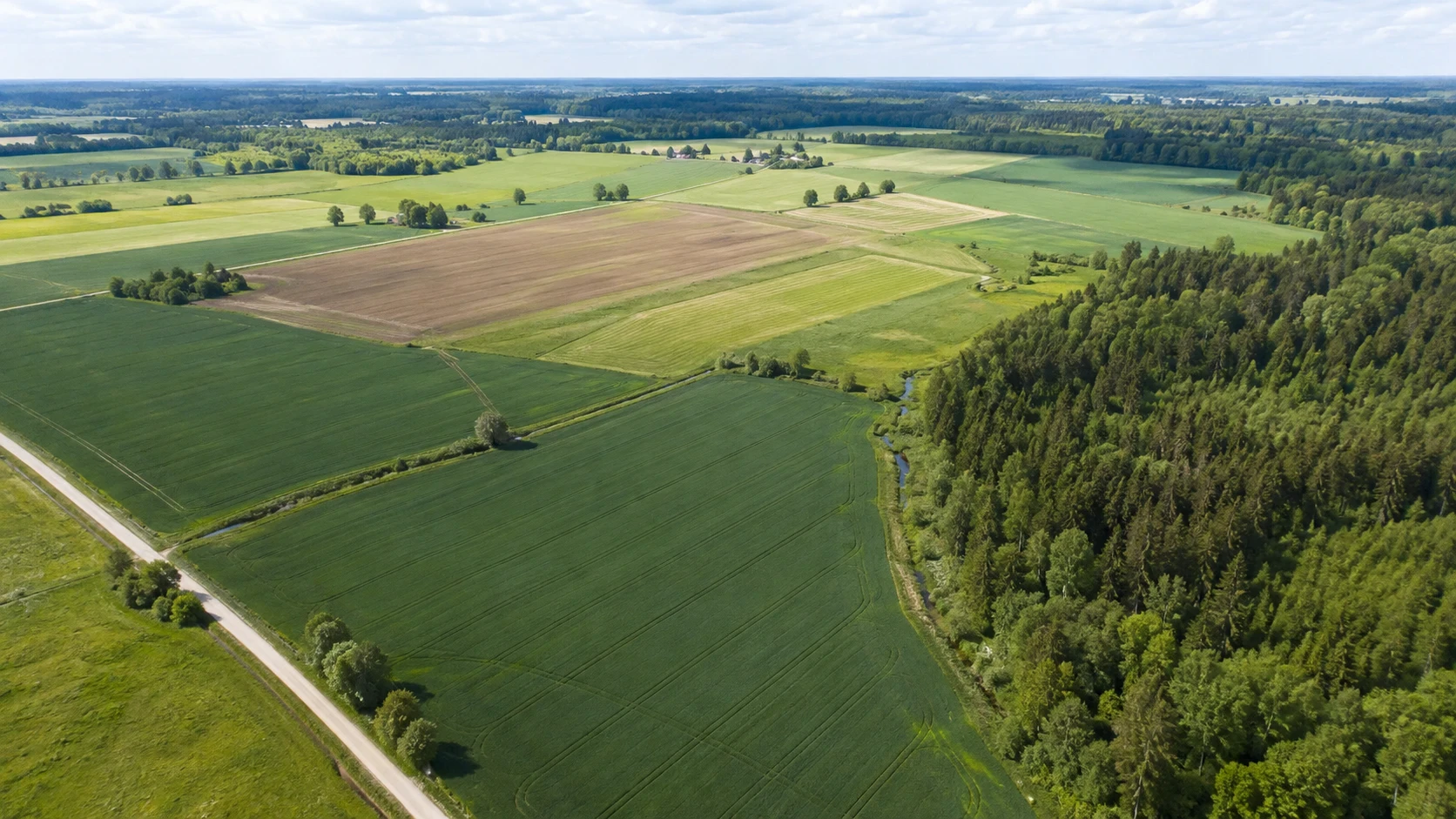
A field that complements land already farmed nearby can be more useful than an isolated parcel with similar physical characteristics.
For a tenant, that may mean shorter travel distances, simpler field operations and better use of existing machinery and infrastructure.
For the landowner, it can translate into stronger local demand for the property.
Looking beyond the property boundary
Soil quality, access, legal status and acquisition price remain fundamental.
The surrounding farming structure adds another layer to the assessment by showing how well the property fits into the local agricultural market and how useful it may be to farms already operating nearby.
Baltic Terra’s approach
Baltic Terra includes local market context in its farmland assessment.
We look at the farming activity around a property, how the land fits into the surrounding agricultural structure and whether there is a clear basis for productive long-term use.
The property is therefore assessed in the context of the local agricultural market, not in isolation.